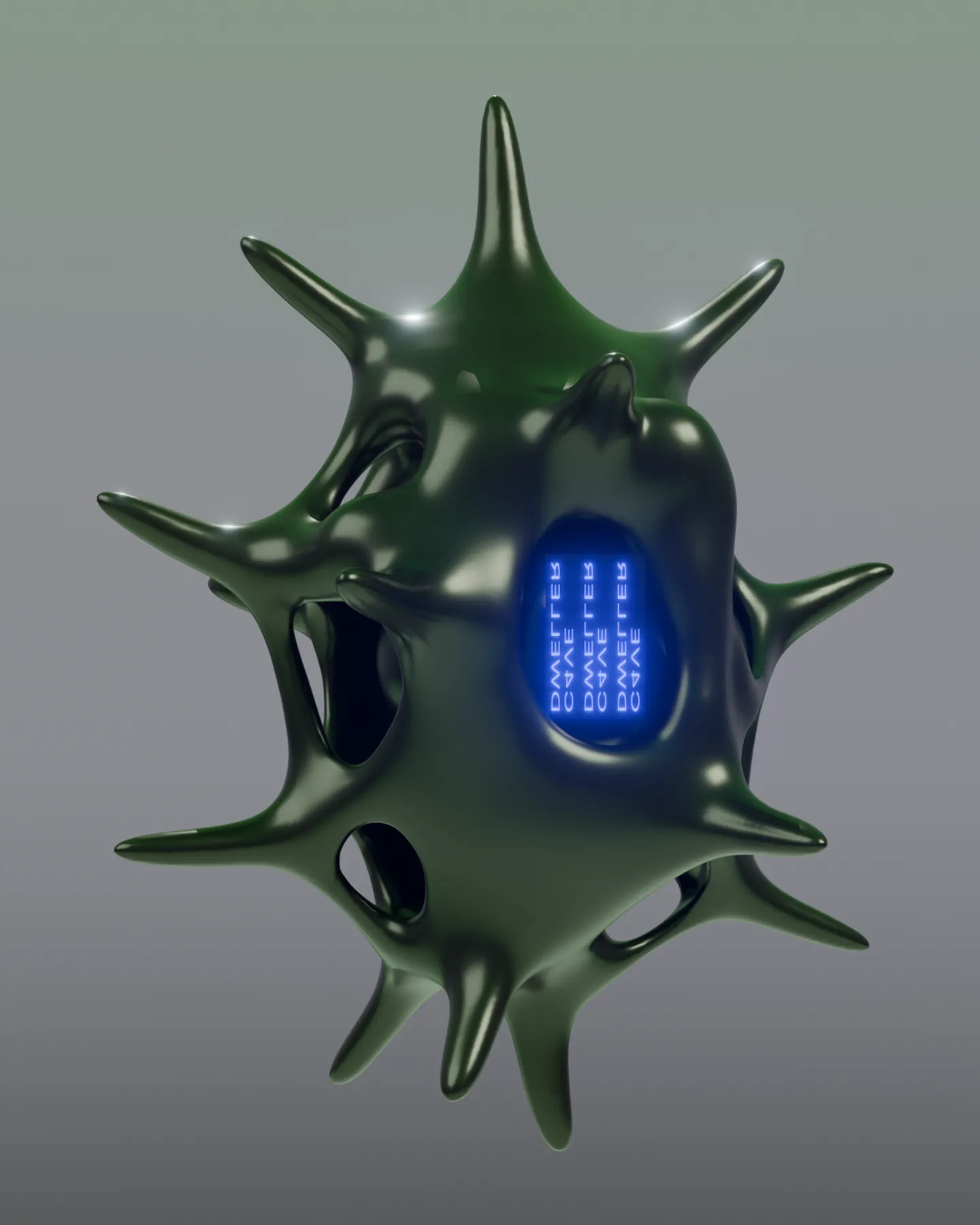
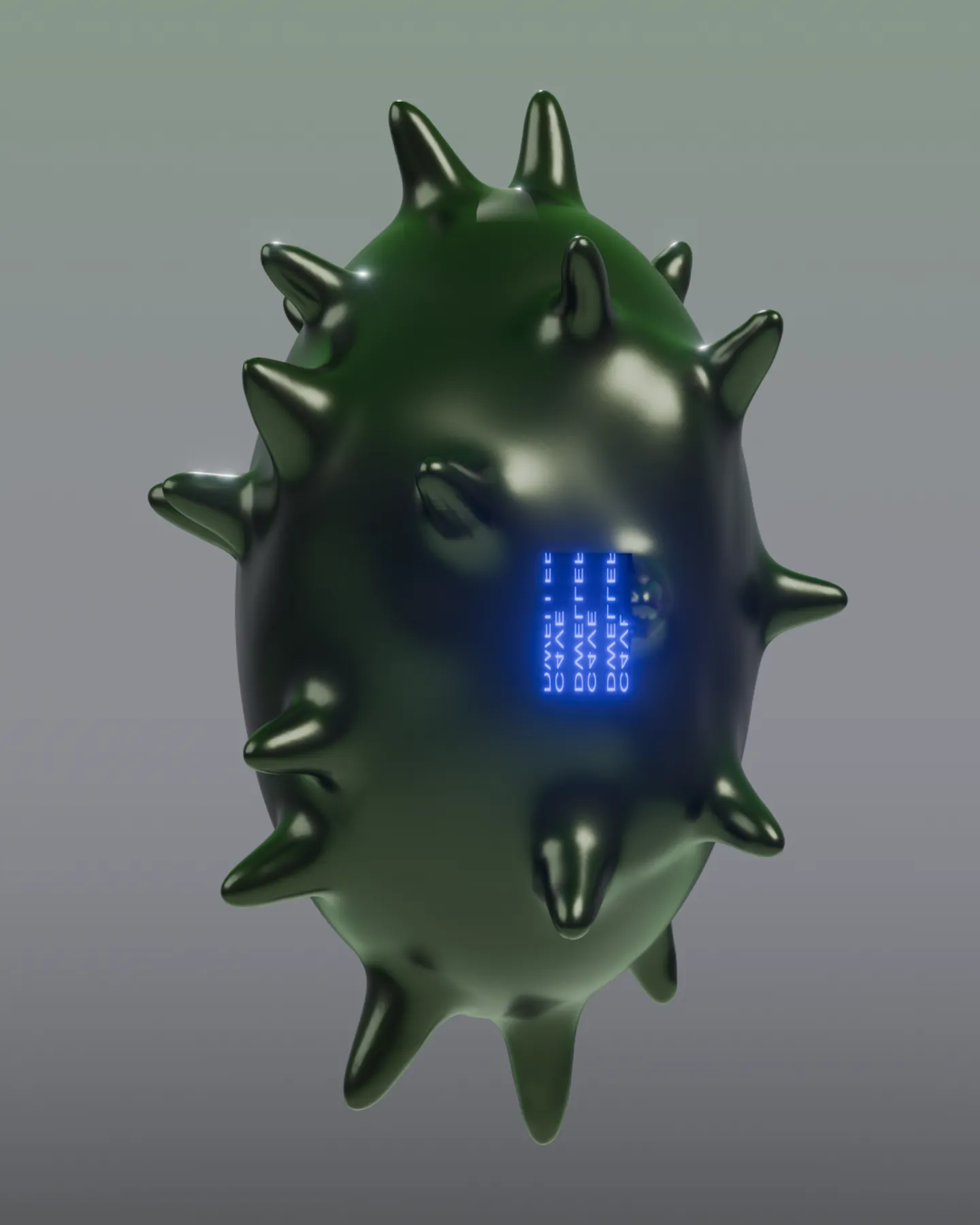
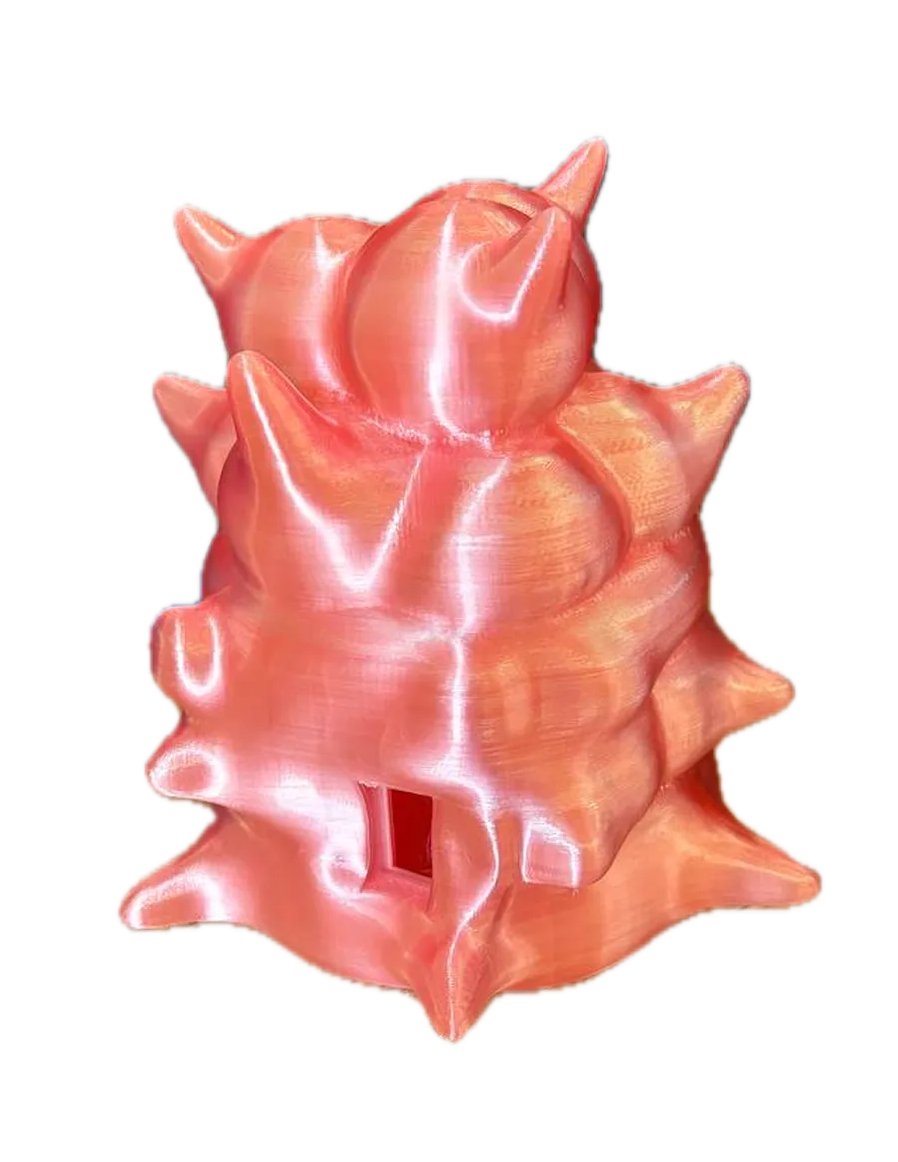
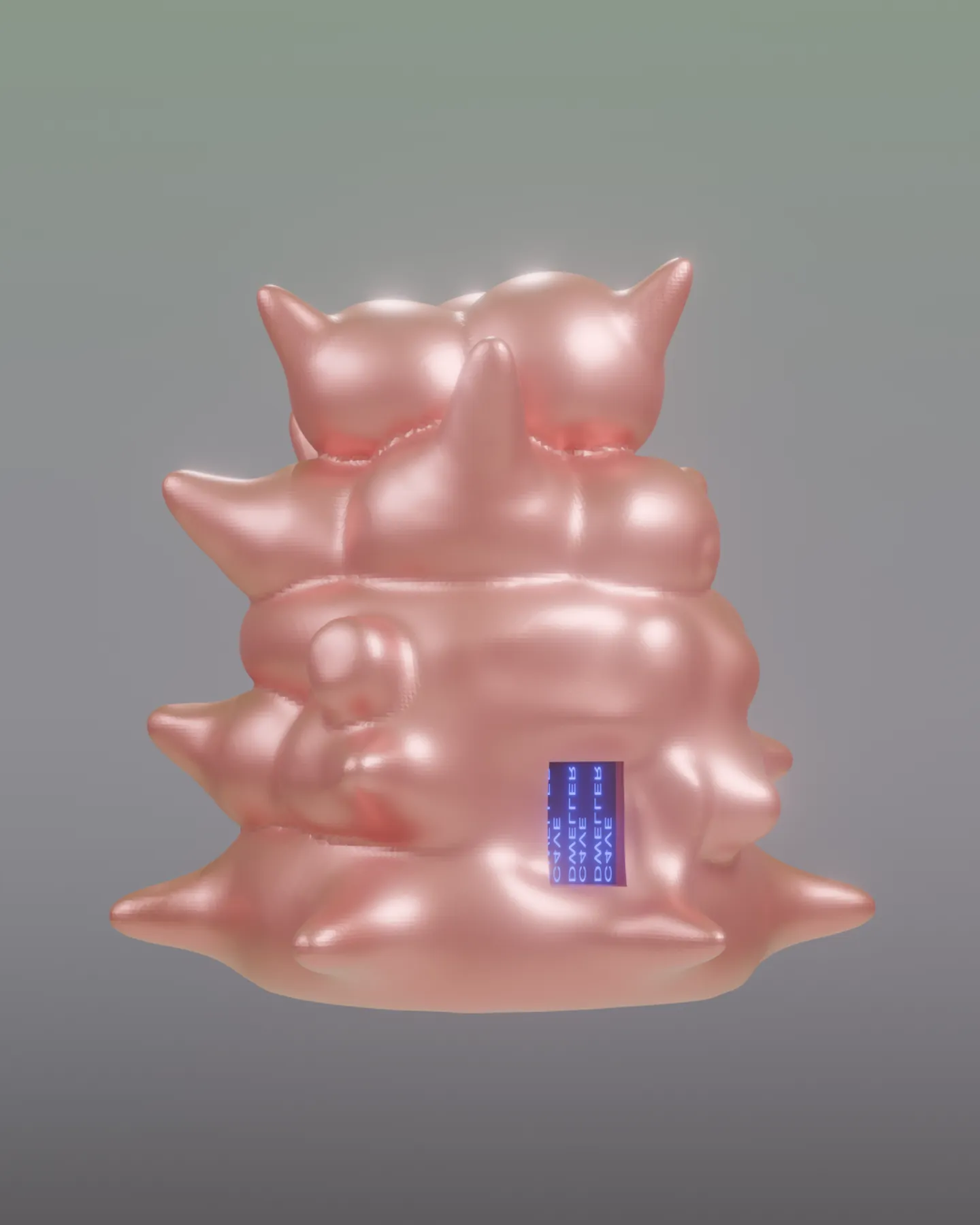
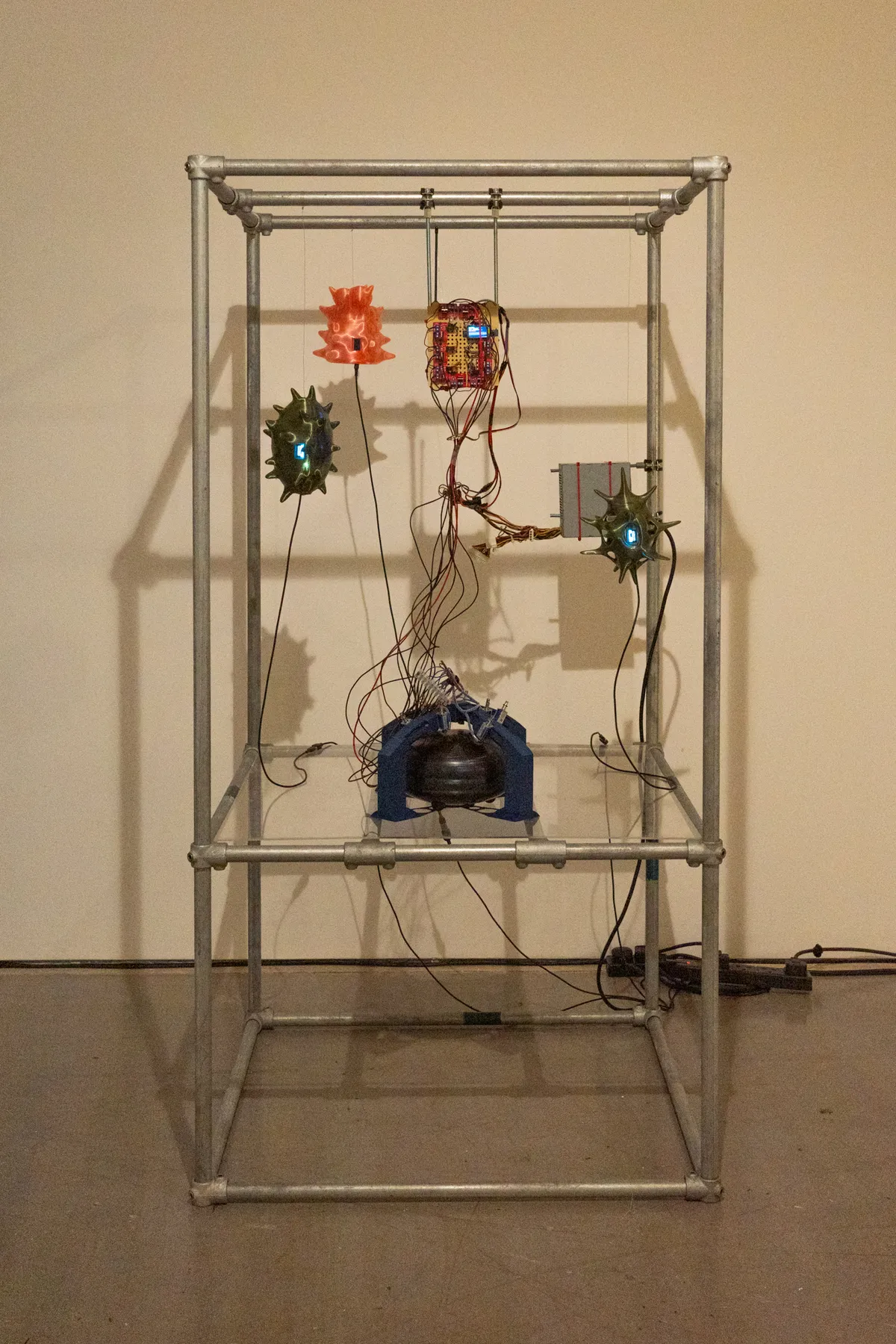
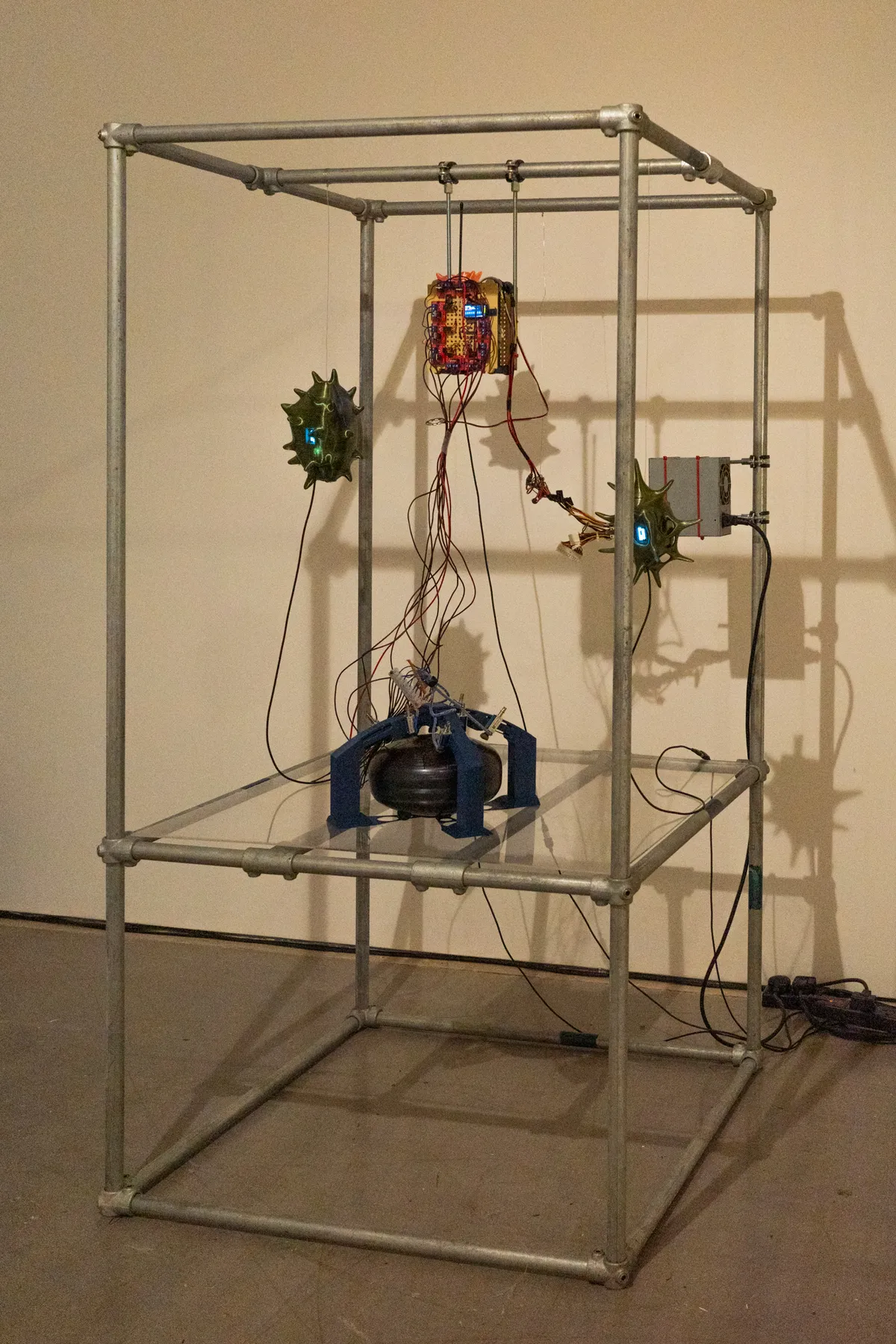
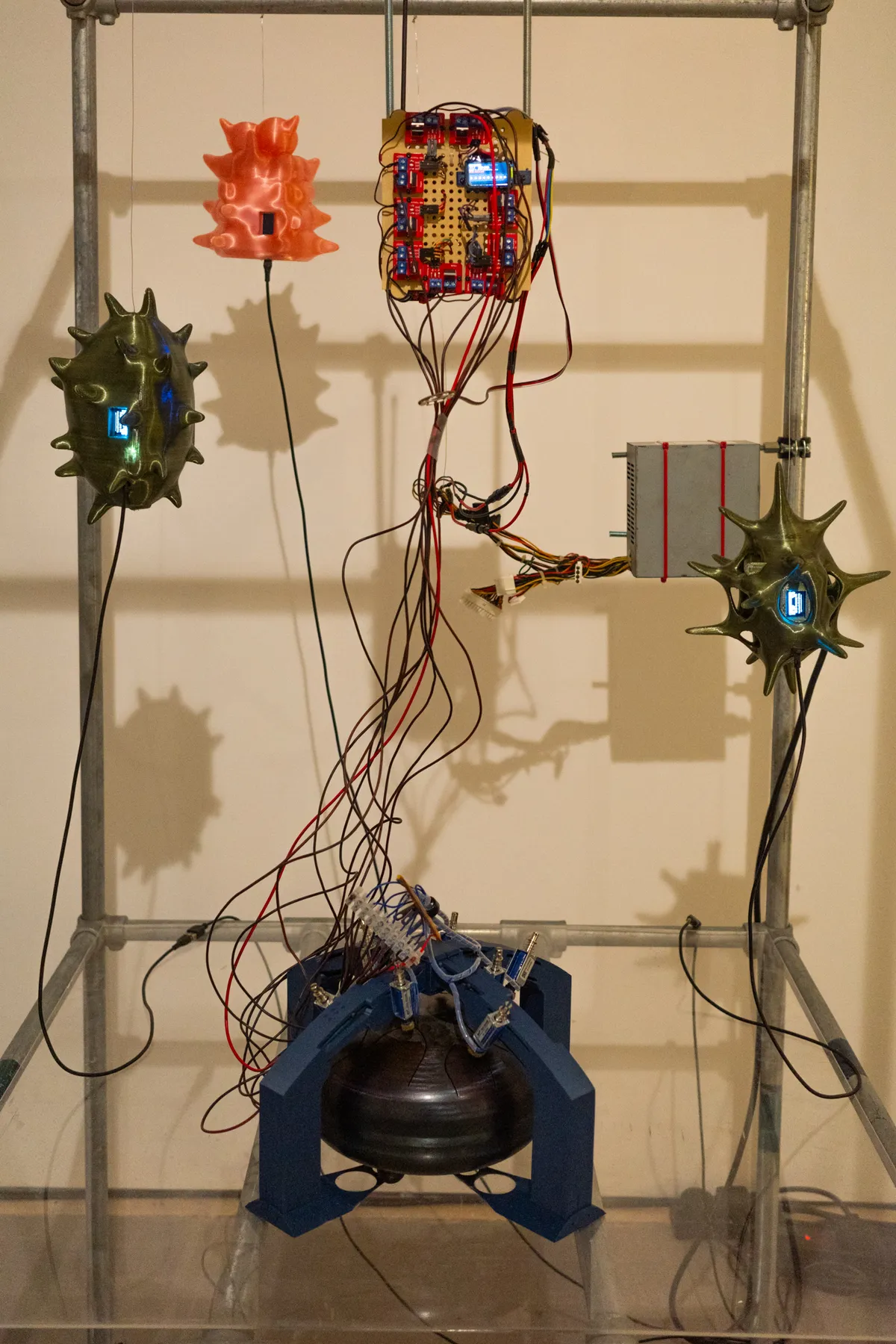
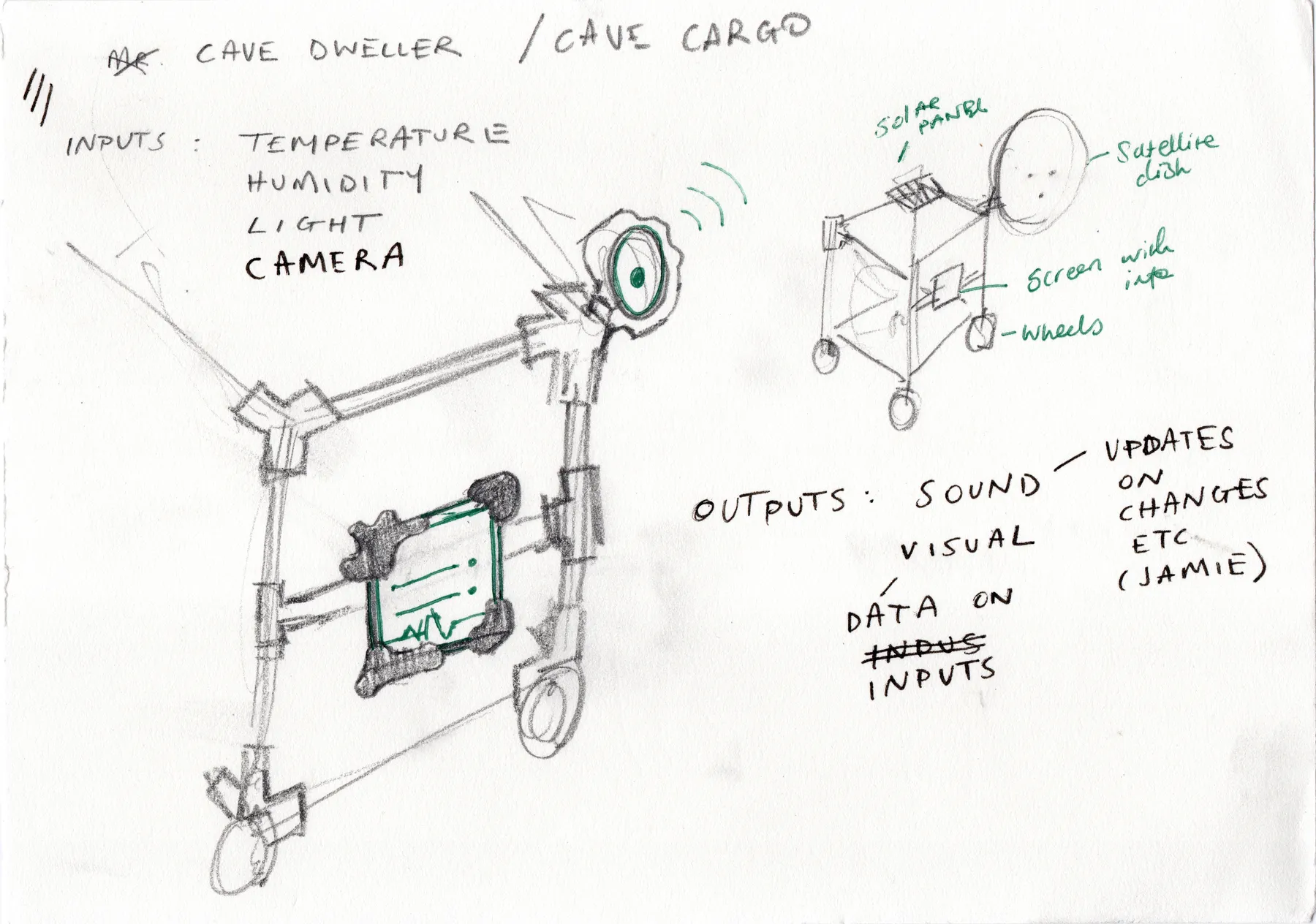
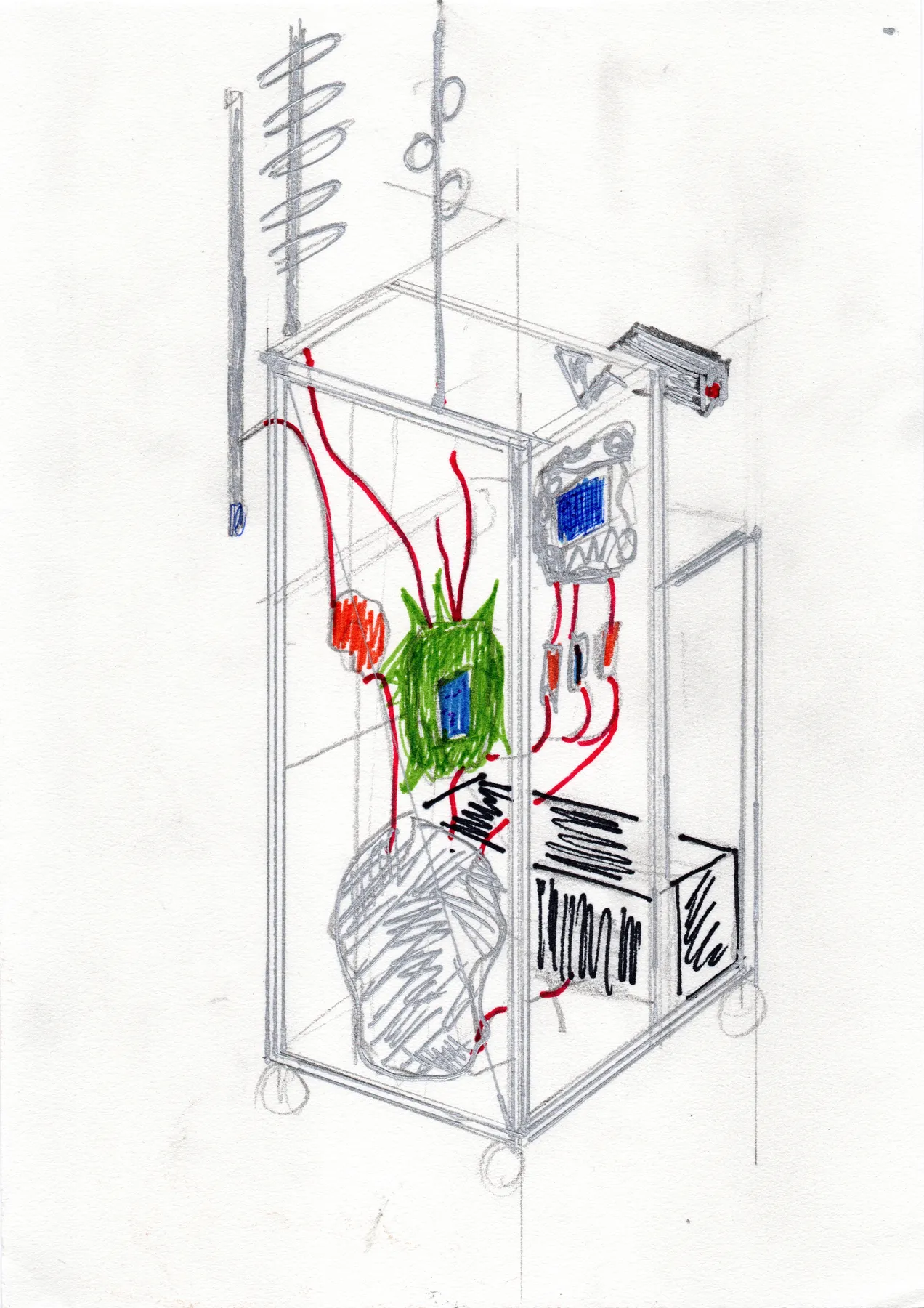
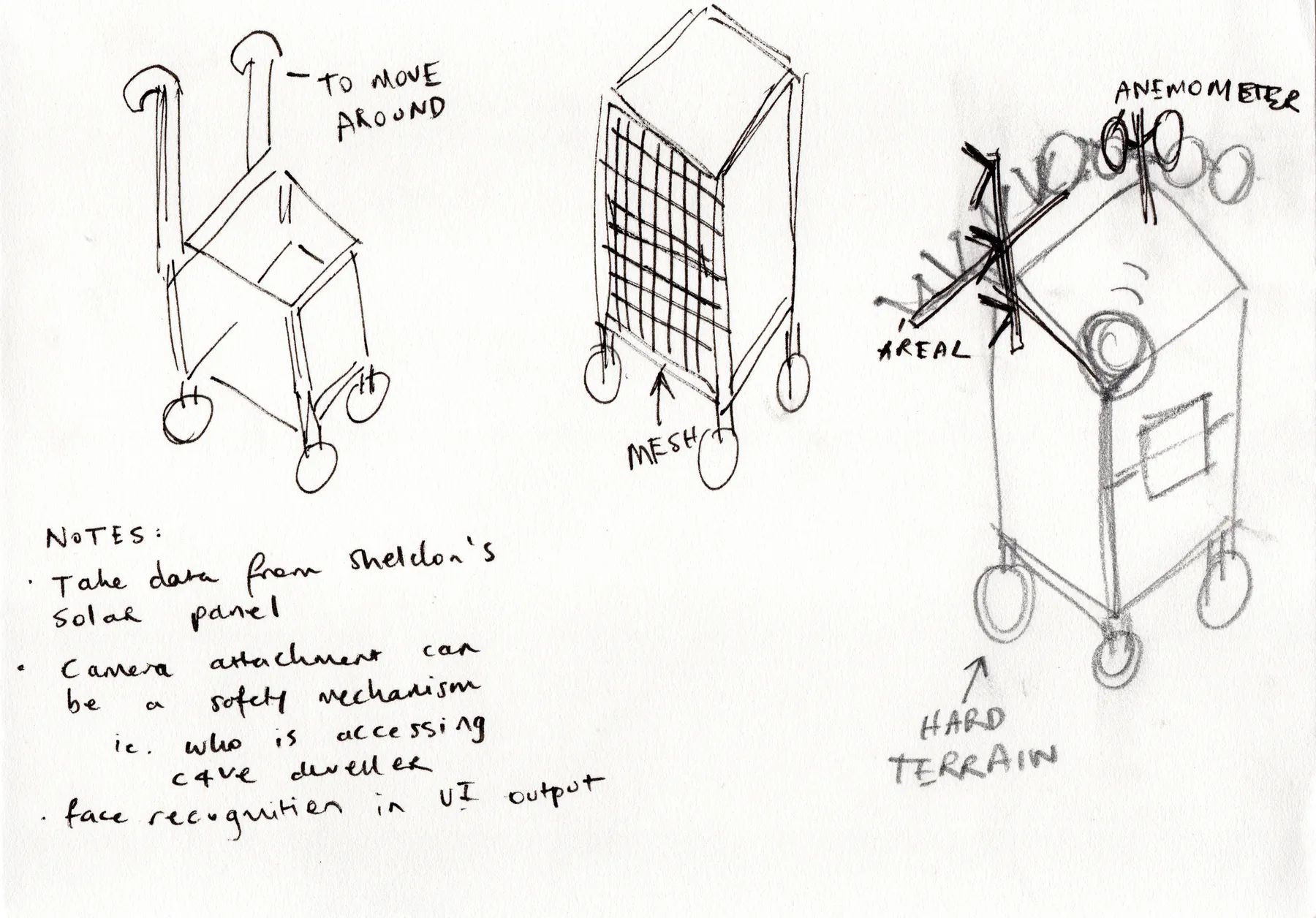
C4VE DWELLER
Metal, 3D Prints, Meshtastic
This installation was a collaboration between Jamie Barbara and myself as part of Chapters from the Technosphere, a project by Sheldon Saliba and Elyse Tonna.
The project proposes a speculative utility system developed in response to invisible energy systems. Rather than focusing solely on electricity or technological infrastructure, the work explores energy as a broader condition of communication, transmission, storage and resilience.
Caves function as low-energy infrastructures. They provided shelter, thermal regulation, protection, storage, and long-term habitation through their relationship with geology rather than through complex technological systems. In contrast, contemporary life depends on vast networks of electrical, computational, communication, and logistical infrastructures that remain largely invisible despite shaping almost every aspect of daily existence.
The installation imagines an alternative communication system operating somewhere between these two conditions.
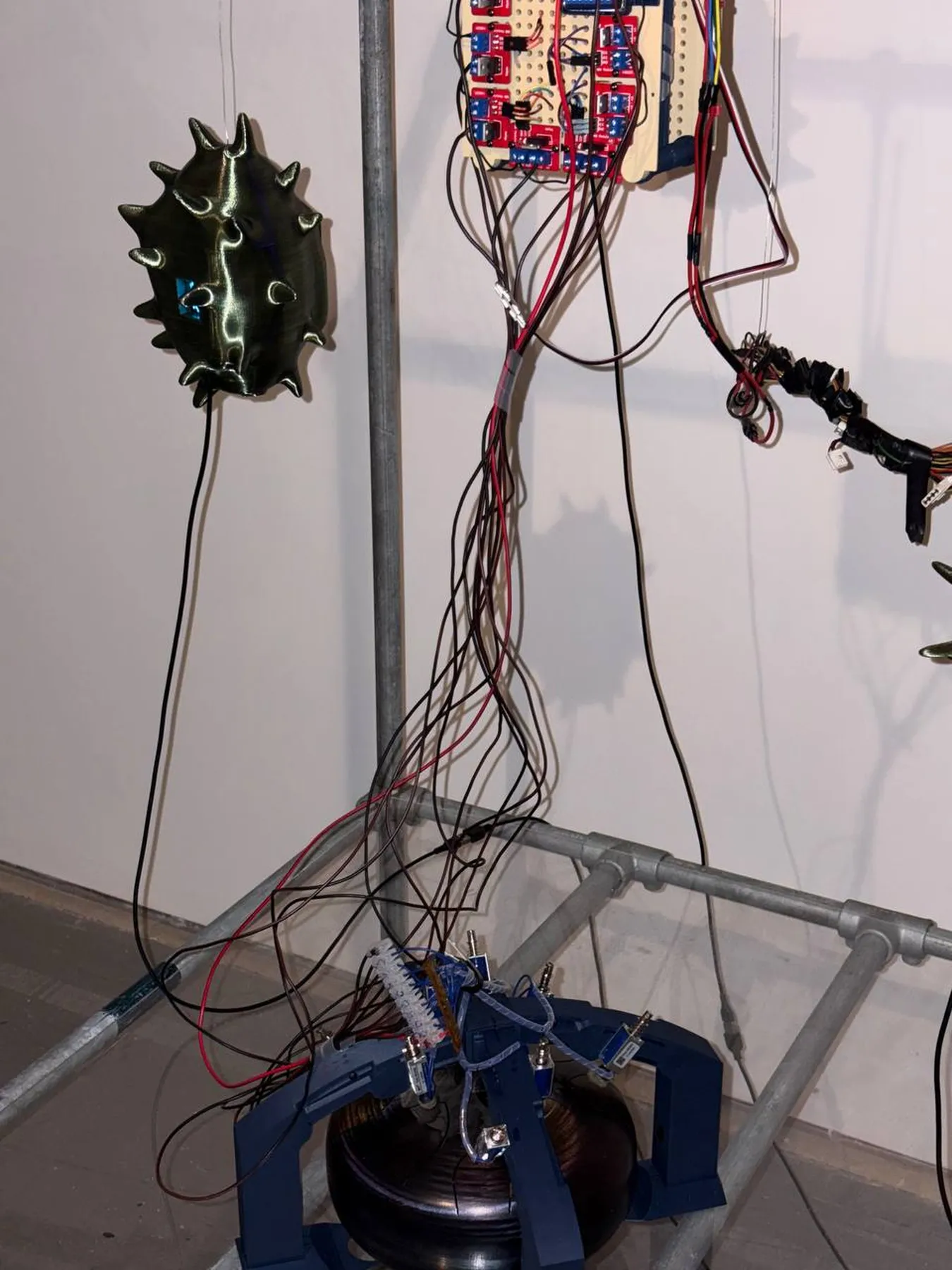
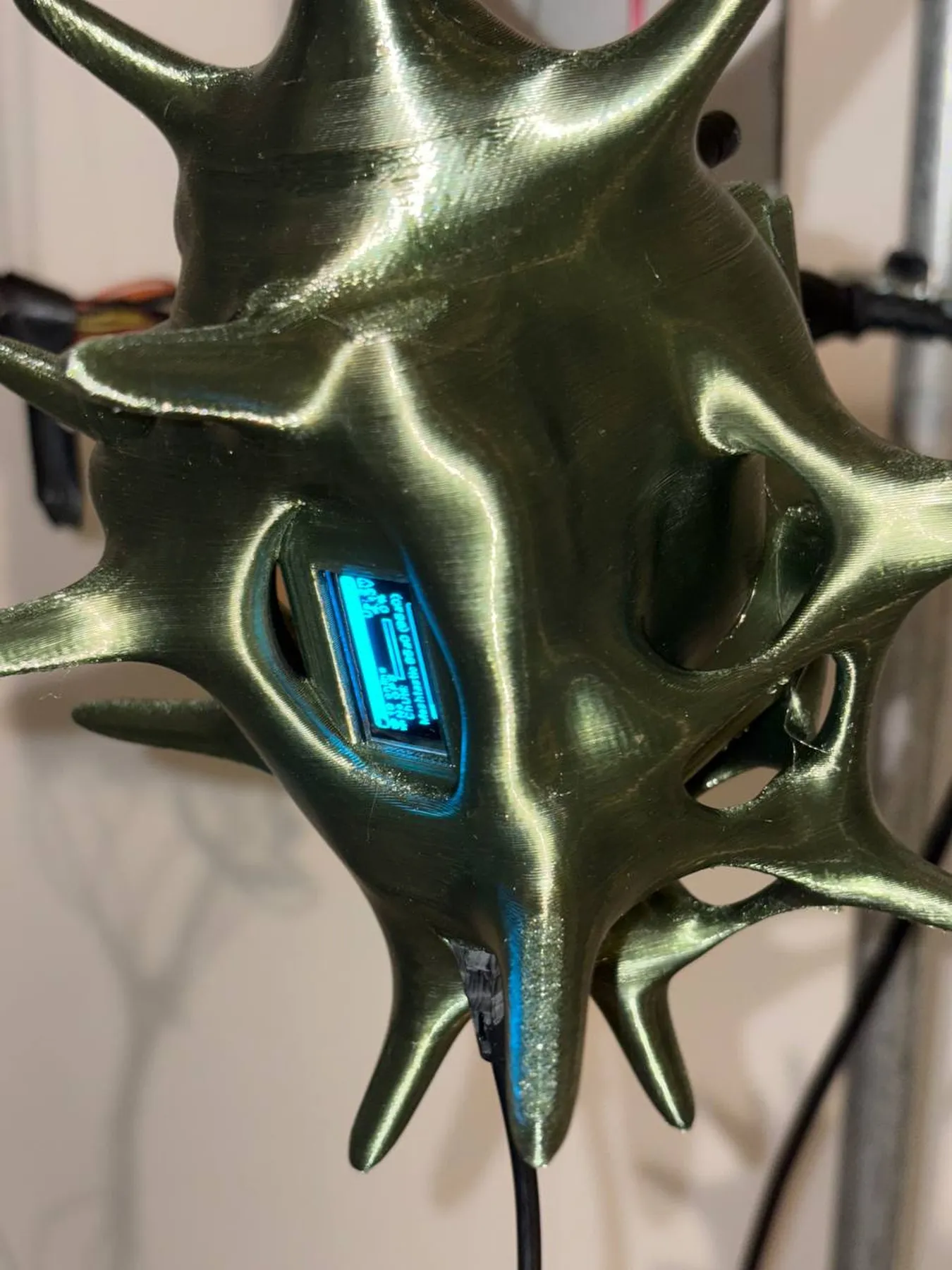
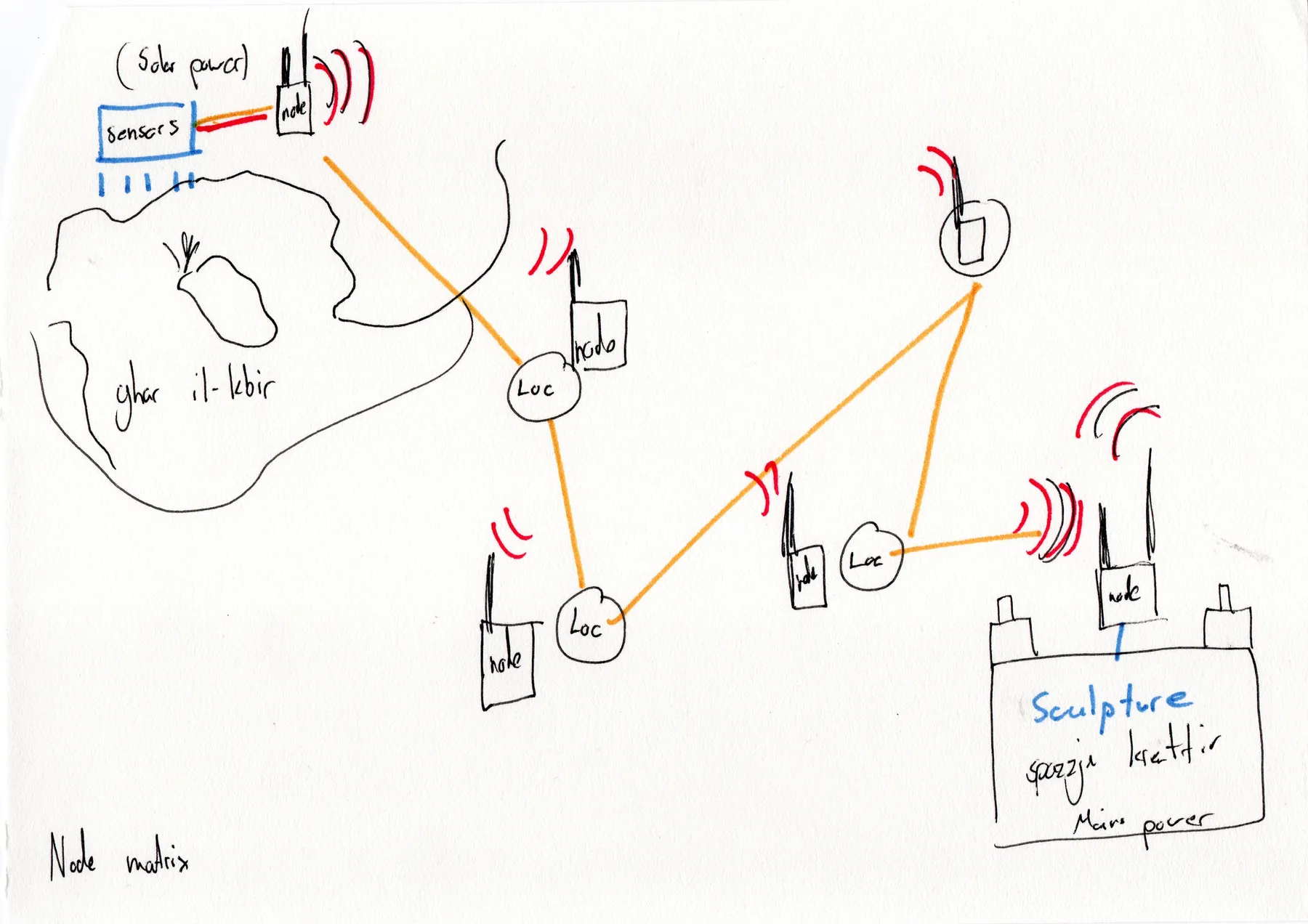
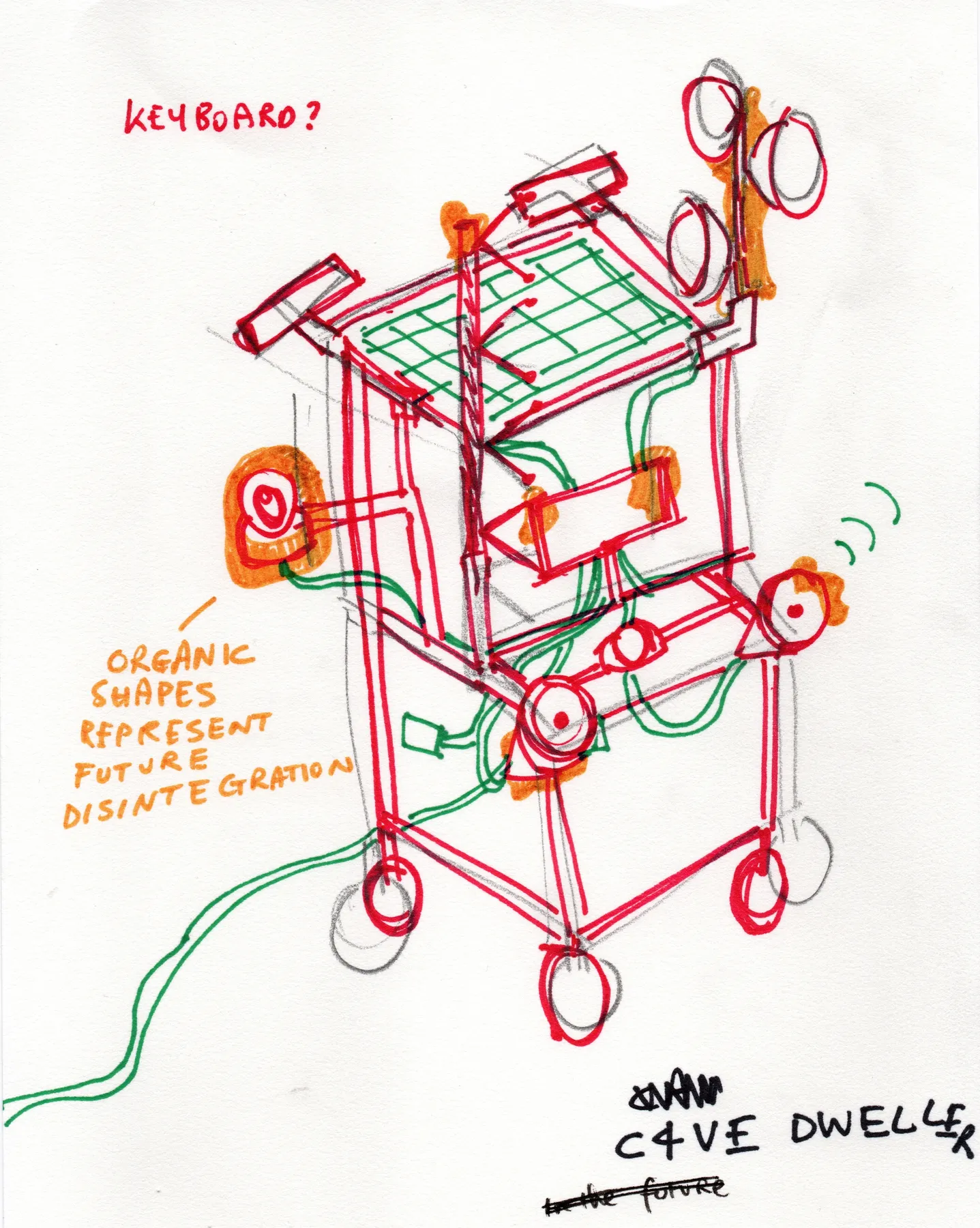
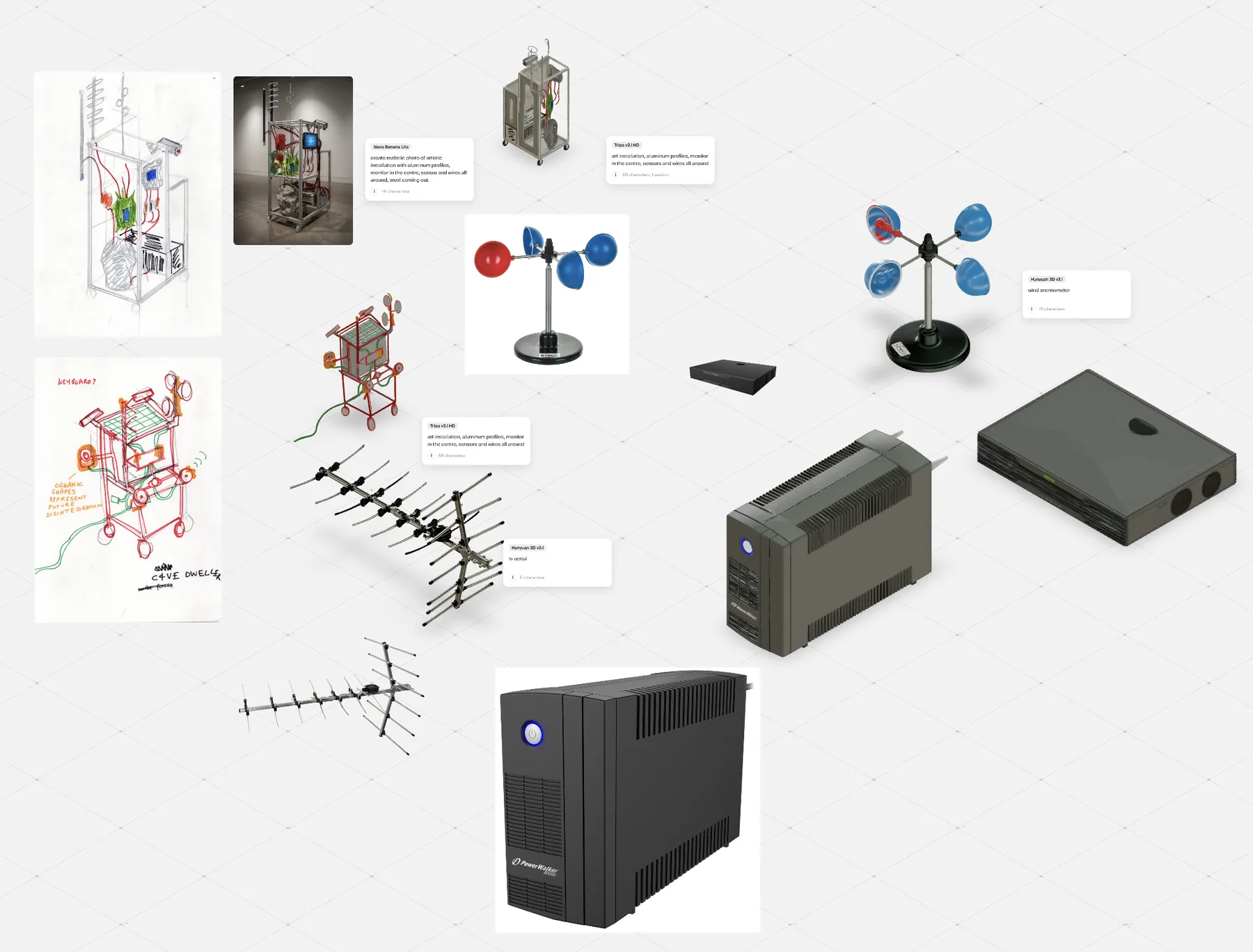
Combining a remote site, simple physical infrastructure, and alternative transmission technologies, the work presents a distributed network concerned with maintaining contact and preserving operational continuity under uncertain conditions. A communication node situated within the cave transmits signals directly to Spazju Kreattiv, extending the installation across two geographically separate spaces by means Antennas, receivers, transmitters, energy storage devices, sensing technologies. Autonomous processes form part of a larger network whose purpose remains partially ambiguous.
Rather than representing invisible systems through visualisation or data display, the installation behaves like an active piece of infrastructure. Signals circulate between the cave and the gallery, devices remain operational regardless of presence, and communication pathways are maintained across distance. The work appears functional, adaptive, and continuously active, suggesting a utility designed for resilience rather than efficiency.
By treating communication as a form of energy circulation and dependency, the sculpture will attempt to ask how societies might organise themselves around alternative infrastructures that prioritise local networks, redundancy, autonomy, and long-term survival over extraction, growth, and optimisation. The cave a point of departure for imagining different relationships between communication, technology, geography, and habitation.